Building a Second Brain
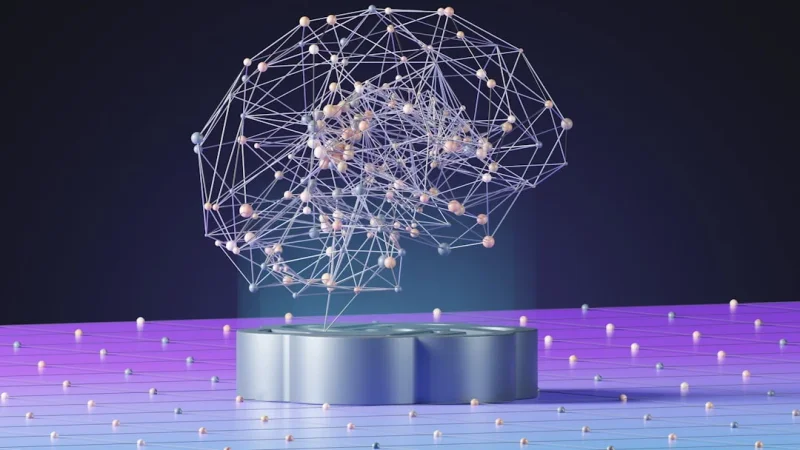
The idea of a “second brain” is simple: offload what you know into a system you trust, so your actual brain can focus on thinking instead of remembering.
Why It Matters
Most of us consume far more information than we retain. Articles, podcasts, conversations, ideas in the shower. Without a capture system, it all evaporates.
A good PKM (personal knowledge management) setup gives you:
- Capture without friction
- Organization that scales
- Retrieval when you need it most
The term was popularized by Tiago Forte1, but the underlying idea is ancient. Commonplace books, zettelkasten, and marginalia all served the same purpose: extending human memory beyond its biological limits.
The Tools I Use
I’ve written more about my specific setup in My Complete Note-Taking Workflow. The short version: I use Obsidian as my primary tool, with a vault that syncs across devices.
The key insight is that the tool matters less than the habit. Pick something, commit to it for 90 days, and iterate.
What Makes a Good Tool
Not every app works for this. The ones that stick tend to share a few traits:
- Local-first storage. Your notes live on your machine, not behind a login wall.
- Plain text or Markdown. Future-proof formats you can read anywhere.
- Linking between notes. The ability to connect ideas is what turns a folder into a knowledge graph.
- Low friction capture. If it takes more than a few seconds to create a note, you won’t do it.
Connecting Ideas
The real power comes from linking. When you connect a note about one topic to another, unexpected insights emerge. This is the core of networked thought.
Your second brain becomes a thinking partner, not just a filing cabinet.
Progressive Summarization
One technique that helps: when you revisit a note, bold the most important sentences. Next time, highlight the bolded ones. Over time, the signal rises to the top without you needing to rewrite anything2.
Common Mistakes
Perfectionism kills PKM systems faster than anything else. Don’t reorganize. Don’t build elaborate folder hierarchies. Just capture and link.
A few patterns that derail people:
- Over-organizing too early. Structure should emerge from use, not be imposed upfront.
- Tool-hopping. Switching apps every month means you never build a critical mass of notes.
- Treating it like a task list. A second brain is for reference and thinking, not for tracking to-dos.
Getting Started
- Pick one tool (Obsidian, Notion, even a folder of text files)
- Start capturing everything interesting for two weeks
- Review weekly and start linking related ideas
- Let the structure emerge organically
A 30-Day Challenge
| Week | Focus | Goal |
|---|---|---|
| 1 | Capture | Write at least one note per day |
| 2 | Link | Connect every new note to at least one existing note |
| 3 | Review | Spend 30 minutes reviewing and refining |
| 4 | Create | Produce one piece of output from your notes |
By the end of the month, you’ll know whether the system works for you. The notes you’ve accumulated become proof of the concept.
The principles here overlap heavily with the Kaizen philosophy of continuous improvement. Small daily deposits compound into something significant.
The goal isn’t a perfect system. It’s a system that makes you think better.